
Uganda’s Chimpanzee ‘Civil War’ Turns Kibale Forest into a Primate Battlefield—and Researchers Fear a Genocide

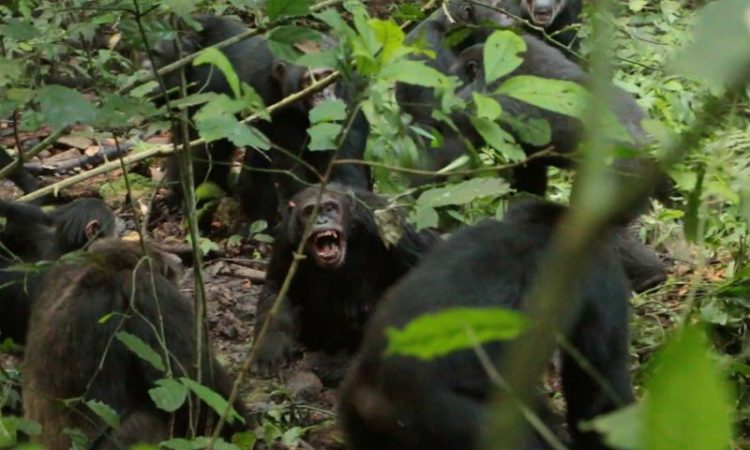
Deep in Uganda’s lush Kibale National Park, a silent, bloody war is raging—not between rival militias or poachers, but among chimpanzees who once shared fruit trees, groomed one another, and lived as the largest known peaceful chimp community on Earth. That harmony shattered on June 24, 2015, when researcher Aaron Sandel watched in disbelief as the forest fell eerily silent. Chimps began grimacing, touching each other for reassurance, and then—violence. What had been a super-community of over 200 individuals, stable for two decades, suddenly fractured into two armed camps: the Western chimps and the Central chimps. Now, nearly a decade later, the conflict has escalated into what scientists officially term a “civil war”—a primate apocalypse estimated to occur once every 500 years. The Western faction, more aggressive and cohesive, now organizes up to 15 lethal patrols every four months. The death toll is climbing: seven adults and 17 infants from the Central group confirmed killed, with 14 more missing and presumed dead. “It’s definitely sad to see these chimps kill one another, especially seeing chimps that I know so well being killed,” Sandel said. “I do sometimes feel like a war correspondent.”

The savagery is methodical. In 2018, a young adult male named Errol—once the subject of Sandel’s dissertation—was ambushed and killed by five Western males feeding at a fig tree. Then came 2019: researchers watched helplessly as three Western males cornered Basie, a beloved 33-year-old chimp, while a female named Aretha desperately tried to shield him before being chased away. Basie died the next day. An elderly male named BF, one of the last chimps to move freely between the factions, escorted Basie’s broken body home—a haunting funeral procession in the canopy. The border between the two chimp territories now shifts constantly, with the Western group steadily pushing eastward, conquering land and leaving infant bodies in their wake. The cause of the rupture remains murky: a mysterious die-off in 2014, a change in alpha male leadership in 2015, and a respiratory epidemic in 2017 appear to have weakened social bonds until the group simply snapped. Unlike human wars, there are no flags, no religions, no ethnic hatreds—only primal, lethal territoriality.

So how does this nightmare end? Researchers see two chilling possibilities, both borrowed from the only other recorded chimpanzee civil war—Jane Goodall’s infamous “Four-Year War” at Gombe in the 1970s. The first: the Central chimps somehow reorganize, fight back, and force a bloody stalemate. The second and more likely outcome: the Western chimps finish what they started, systematically hunting down every last member of the Central group until none remain. A third option—reconciliation—seems almost impossible. “For everything I know about chimp behavior, I don’t see how that’s possible,” Sandel admitted. “But I also know enough about chimps never to be so surprised by what they’re capable of.” As the forest echoes with screams and the bodies of infants fall from the trees, researchers are left with an uncomfortable mirror: if our closest living relatives can descend into genocide without ideology, what does that say about the fragility of peace among humans? The war in Kibale is not just a wildlife tragedy—it is a living laboratory of terror, and no one knows who will be left when the last branch snaps.
Culled from CNN.