

Feeding Hearts, Healing Hunger: Arkansas Unites Faith and Community to Tackle Food Insecurity and Foster Care

LITTLE ROCK, Ark. — The specter of hunger looms large over Arkansas, where a single food bank provides over 11 million meals annually to meet an overwhelming need. Behind these numbers lies a crisis affecting children, the elderly, and the working poor—a reality no single organization can solve alone.

Kent Eikenberry, CEO of the Northwest Arkansas Food Bank, is blunt about the staggering challenge. “Food insecurity across the nation affects 40 million people,” he shared. “The problem is far too large for any single organization to solve.” By partnering with over 100 agencies, Eikenberry’s food bank strives to deliver nutritious food to some of the state’s most vulnerable populations.
The ripple effect of hunger extends far beyond empty stomachs, as Christen Butler from the C.A.L.L. Foster Family Ministry points out: “Food insecurity is a significant reason why children enter foster care. We need to get ahead of it to help keep kids from entering the system and to stabilize foster families, so children receive the help, love, and healing home they need.”
Addressing this crisis brought more than 100 faith leaders together in Little Rock for the first Arkansas Faith Summit, a gathering with an ambitious vision to unite government, faith communities, and public and private sectors to tackle food insecurity, foster care, and more.

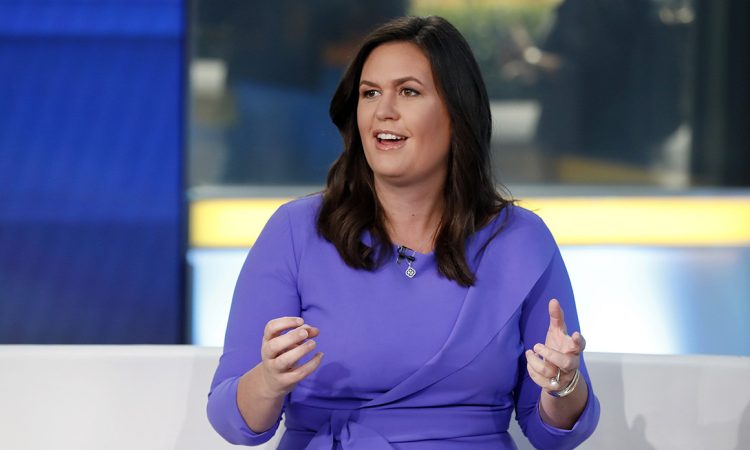
“There are so many silos within the state,” said Gov. Sarah Huckabee Sanders, flanked by her father, former Governor Mike Huckabee. “Bringing everyone together in a collaborative spirit allows us to tackle some of the state’s biggest issues.” Sanders, a steadfast advocate for faith-inspired action, believes these efforts can provide a blueprint for other states. “When your faith is authentic, you don’t leave it behind when you step into any role.”
The event not only spotlighted the state’s hunger crisis but also raised crucial conversations on faith, community service, and educational choice. Stephanie Nichols from the Arkansas Justice Institute voiced her hope for broader school options, citing how the state’s LEARNS Act allows parents more educational choices, including private and homeschool options. “If more churches opened their facilities for educational purposes, we’d have more children educated with biblical worldviews,” Nichols said, encouraging the Christian community to innovate.
But the summit also opened space for discussion on boundaries, including the importance of church-state separation and how Christians can boldly practice faith within these lines. “I hope we see more creativity from the body of Christ going forward,” Nichols added, envisioning a role where faith-based institutions drive positive societal change.
Reflecting on the day, Justin Bilson of Fellowship Bible Church noted, “Whenever this many faith leaders gather, everyone brings their own thoughts and opinions. But I appreciate that we can come together under one purpose—to acknowledge the importance of the intersection of faith and government and to believe in a greater purpose for our state.”
Gov. Sanders is taking action to foster further collaboration through the newly launched Arkansas Faith-Based Initiative website, a portal designed to connect individuals and organizations to community outreach opportunities. “Bringing entities together to work collectively will allow us to make a much bigger impact,” she noted, expressing her vision for Arkansas to be a model for faith-inspired solutions nationwide.
The summit’s impact will be measured in time, but Eikenberry draws inspiration from a timeless story: “I often joke that Jesus himself ran the first food bank. He took five loaves and two fish and fed a multitude. That’s what we are asked to do every day.”
In Arkansas, a movement to end hunger and elevate community care is taking shape, and as faith and action converge, the state’s leaders hope to not only fill empty plates but also inspire fuller lives.