

Whispers in Stone: A 2,800-Year-Old Seal Unlocks the Biblical Past

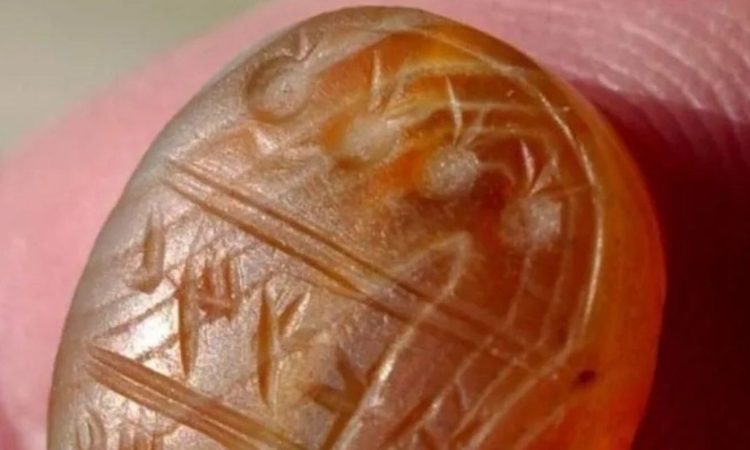
In the quiet hum of modern highway construction at northern Israel’s Ein Tut Interchange, workers unearthed something that silenced the machinery and awakened the echoes of antiquity—a 2,800-year-old gemstone seal bearing witness to the very era of the biblical kings. Recently unveiled by the Israel Antiquities Authority, this exquisitely carved artifact dates to the late eighth century B.C., a period when the kingdoms of Judah and Israel walked the pages of Scripture. Adorned with four delicately engraved pomegranates—an ancient symbol of fertility, prosperity, and priestly blessing—the seal bears an ancient Hebrew inscription reading, “Belonging to Makhach (son of) Amihai.” Though this particular name does not appear in the biblical text, its owner would have lived and breathed under the shadow of Judah’s throne, perhaps during the successive reigns of Jotham, Ahaz, or Hezekiah, kings whose stories are woven into the very fabric of the Old Testament.
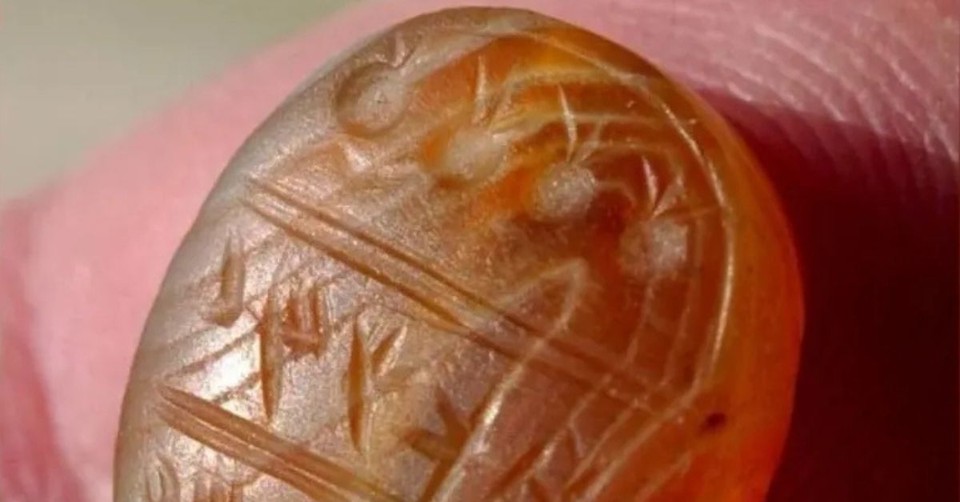
This remarkable discovery transforms the abstract world of biblical narrative into tangible reality, offering a fingerprint of daily life in an age of faith, prophecy, and royal intrigue. Every intricately carved pomegranate speaks of a culture steeped in symbolism, where even a personal seal carried the weight of identity, authority, and devotion. Found amid the earth displaced for a twenty-first-century roadway, this small stone bridges an impossible chasm of millennia, reminding us that the land of Israel still holds its ancient secrets close—yielding them, like whispered prayers, to those who listen with patience and reverence. In the palm of this tiny seal rests not just the name of one man and his father, but the heartbeat of a civilization whose echoes continue to shape the world today.