

Army Tests New ‘Hammer of the Gods’ Weapon-Disrupting System Overseas for the First Time


The U.S. Army has successfully tested a new electronic warfare system overseas designed to covertly scramble enemy navigation signals, making it harder for adversaries to accurately strike targets while avoiding detection. The system, dubbed “Hammer of the Gods,” was tested at sea off the U.S. West Coast in mid-July as part of the Project Convergence Capstone 6 (PC-C6) experiment, marking the official debut of its maritime variant. The portable signal disruptor can reportedly blind enemy precision-guided weapons, including long-range artillery and cruise missiles, by jamming positioning, navigation, and timing (PNT) signals—including GPS data—that these weapons rely on for accuracy. Without reliable PNT data, weapon accuracy drops sharply, increasing the likelihood of delayed missions and missed targets.
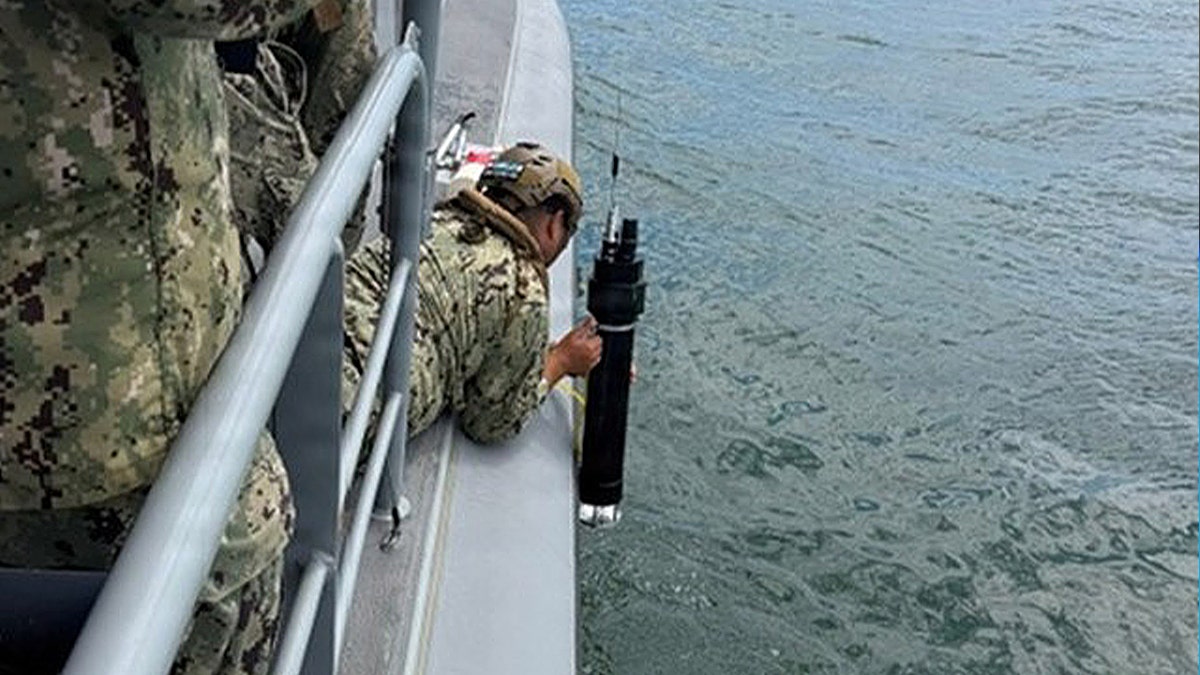
The system is designed to be highly deployable with low electromagnetic signal characteristics, allowing it to operate from small vessels or even unmanned platforms while remaining difficult to detect by enemy electronic surveillance . It also creates a resilient communications network that allows friendly forces to stay connected despite heavy electronic jamming, linking military devices together so troops can continue to operate in degraded environments. Army officials said the experiment demonstrated the system could be successfully launched, operated, and recovered in real-world maritime environments . The testing brought together the U.S. Army, Navy, and Space Force, alongside U.S. Space Forces Pacific, Naval Base San Diego, and the U.S. Army Space and Missile Defense Command, to integrate space, cyber, and conventional capabilities during the exercise.