

Divine Discovery: Ancient Deity’s Head Uncovered at Historic Church


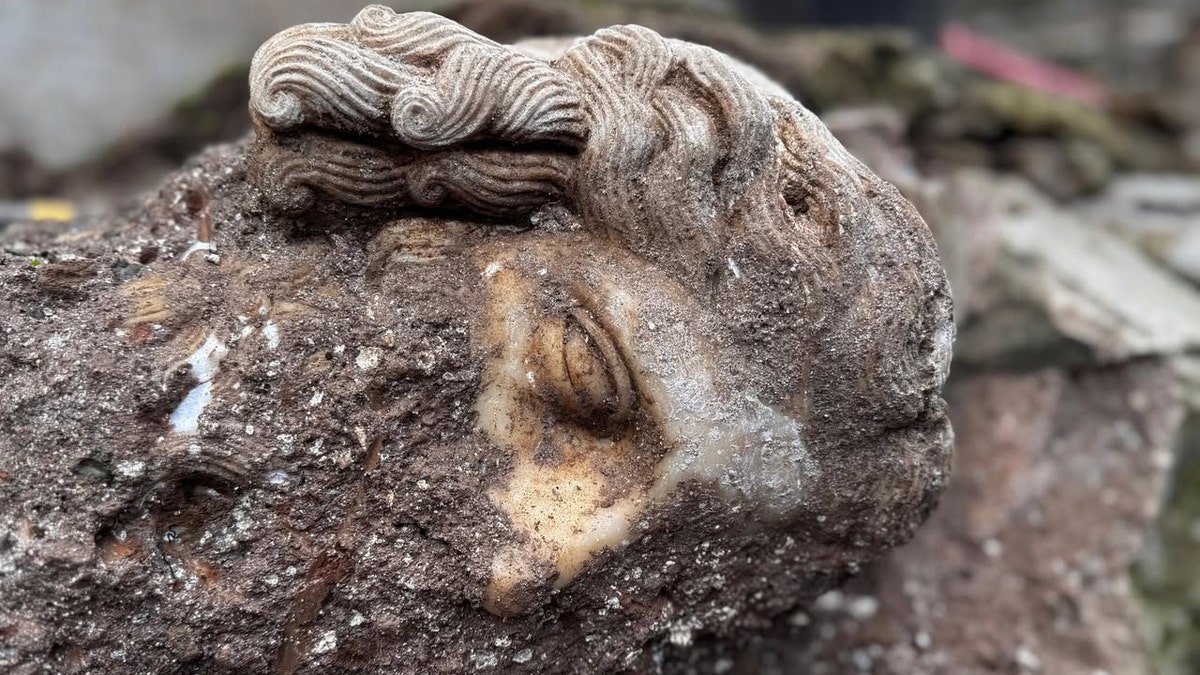
In a remarkable archaeological find, excavators working at the ancient Basilica of St. Stephen on Caelian Hill in Rome, Italy, have stumbled upon a stunning relic from a bygone era – the head of an ancient deity. The Appian Way Regional Park announced the discovery on Facebook, revealing that the stone head was found in the foundation of the church, which was built in the fifth century A.D. Despite being significantly deteriorated over the centuries, the statue still sports a head of curly hair and a beard, hinting at its ancient origins.
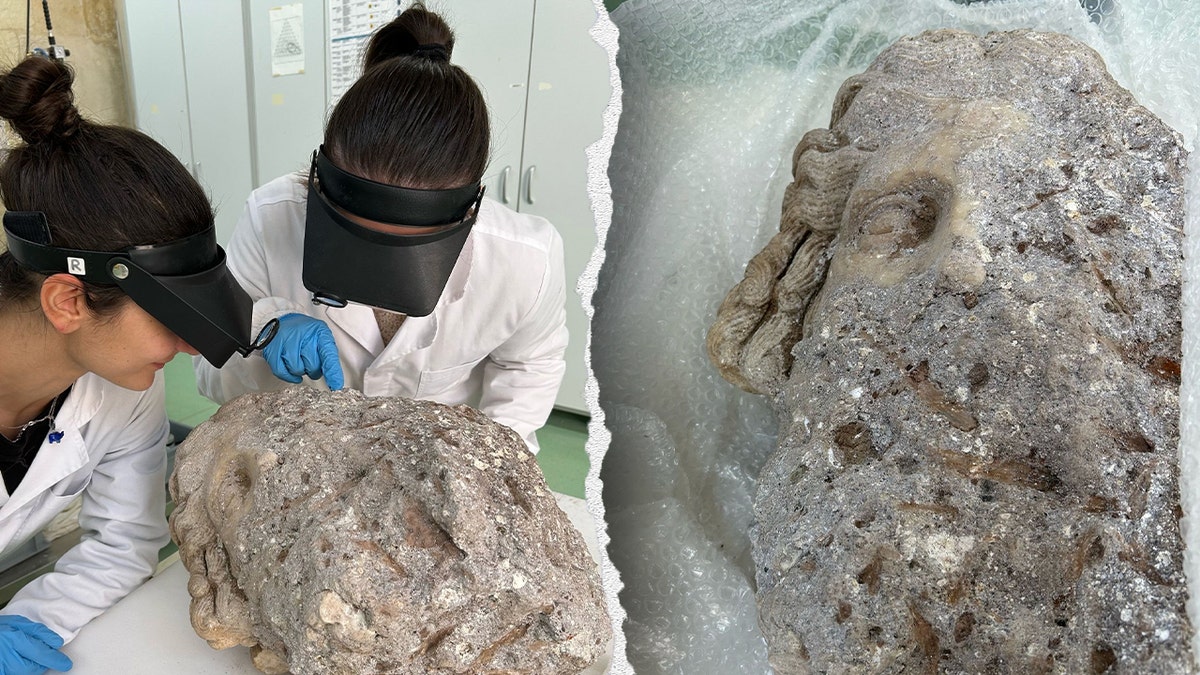
According to experts, the bearded male figure depicted in the statue head was likely a deity, although its current state makes it difficult to identify with certainty. Pictures of the stone head show faint features, with significant layers of mortar covering the face, preventing a complete reading. The discovery has sparked excitement among archaeologists and historians, who believe that the statue could provide valuable insights into the cultural and settlement dynamics of the late antique period.
The Appian Way Regional Park has collaborated with the Central Institute for Restoration (ICR) to study and restore the artifact. The stone head will be transferred to researchers in Matera, Italy, who will document, study, and restore the artifact using innovative scientific protocols. The research results are expected to contribute significantly to the understanding of the Appia Antica territory during the late antique period.
This remarkable discovery is a testament to the rich history and cultural heritage of the region. As archaeologists continue to uncover the secrets of the ancient world, finds like this remind us of the importance of preserving our cultural artifacts and learning from the past. The discovery of the ancient deity’s head is a significant find, and its restoration will likely shed new light on the history of the region.