
A Diplomatic Breakthrough: Trump’s Envoy Secures the Freedom of Six Americans from Venezuela


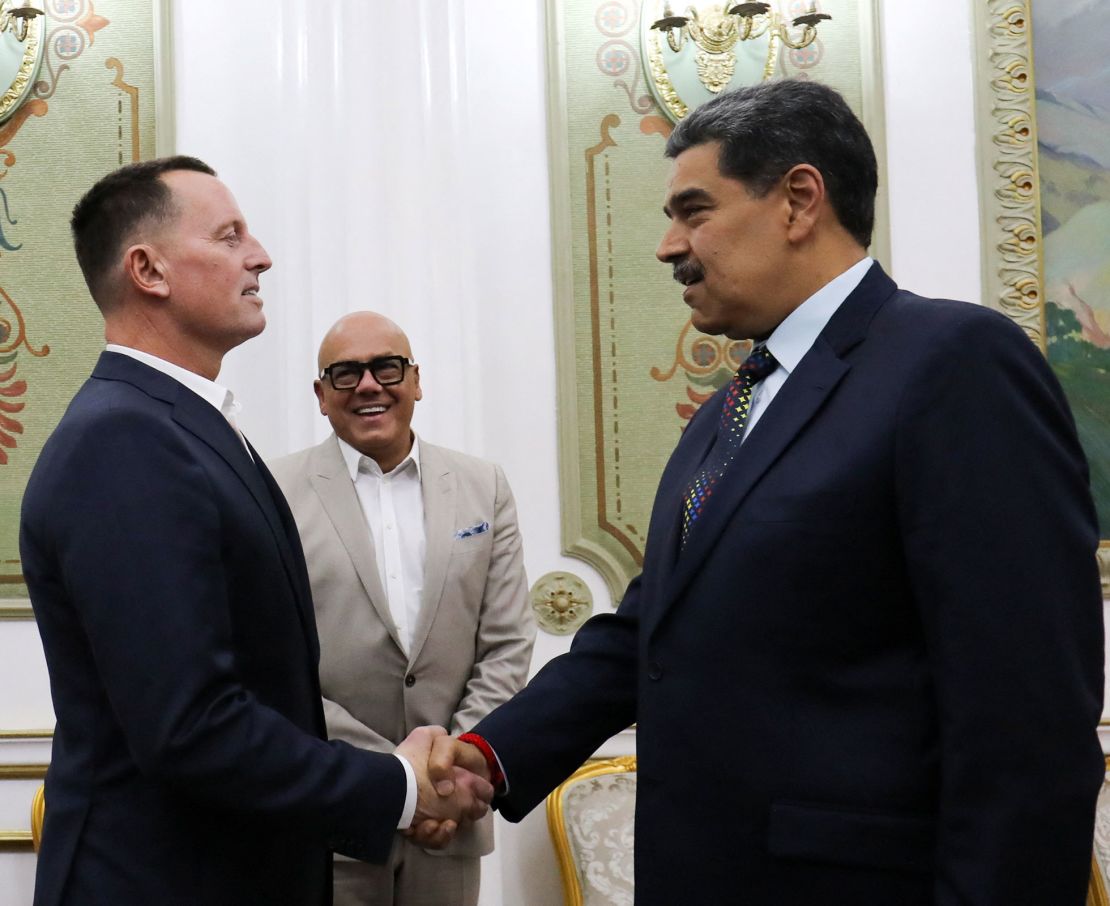
In a stunning turn of events, six American citizens who had been detained in Venezuela are now on their way home to the United States, President Donald Trump announced Friday. The release follows a high-level diplomatic meeting between Trump’s special envoy for missions, Richard Grenell, and Venezuelan President Nicolás Maduro in Caracas—a rare dialogue given that Washington does not officially recognize Maduro’s presidency.
Diplomatic Gambit Yields Results
The meeting, first reported by CNN, marks a significant development in U.S.-Venezuela relations. The United States, along with several Western allies, has long contested Maduro’s legitimacy, citing alleged election fraud in Venezuela’s 2024 presidential race. Despite these tensions, Friday’s discussions resulted in a major breakthrough—securing the release of the detained Americans, a move likely to have significant geopolitical repercussions.
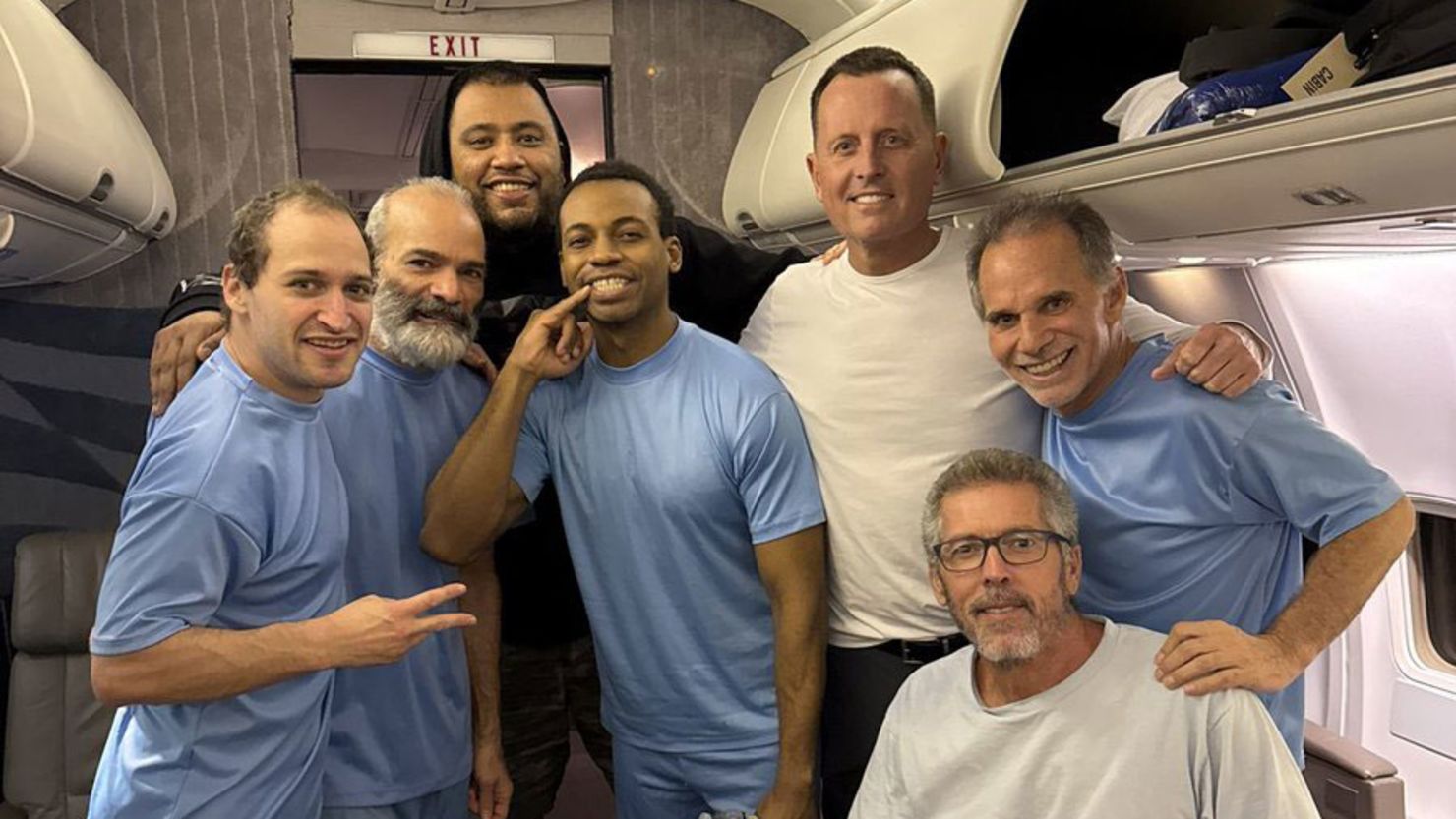
Though U.S. officials have yet to disclose the identities of the six freed individuals, Grenell shared a photograph on X (formerly Twitter) showing him aboard a plane with the former detainees. Four of them were dressed in light blue outfits commonly associated with Venezuela’s prison system.
“I’ve just been informed that we are bringing six hostages home from Venezuela,” Trump posted on Truth Social. “Thank you to Ric Grenell and my entire staff. Great job!”
Grenell followed up with his own statement: “We are wheels up and headed home with these six American citizens. They just spoke to President Trump, and they couldn’t stop thanking him.”
Contentious Political Landscape
Maduro’s leadership remains a point of contention, both domestically and internationally. Opposition leader Edmundo Gonzalez, widely regarded by independent observers as the legitimate winner of the 2024 election, has challenged Maduro’s claim to a third term. The United States, the European Union, Canada, and the United Kingdom have refused to recognize Maduro’s government, imposing sanctions and diplomatic restrictions on Venezuelan officials.
Trump’s engagement in the negotiations comes amid ongoing discussions about U.S. deportations of Venezuelan nationals. His administration has prioritized mass deportations, but Maduro has resisted accepting repatriated Venezuelans, further complicating diplomatic relations. Gonzalez, who attended Trump’s inauguration, has publicly cautioned against any deal that would bolster Maduro’s standing.
Diplomatic Dance: Balancing Humanitarian and Political Agendas
The meeting between Grenell and Maduro was expected to touch on multiple issues, including migration and U.S. sanctions. While details of their discussion remain under wraps, Maduro later addressed the encounter during a speech, suggesting that it could pave the way for further agreements.
“President Donald Trump, we have made a first step, hopefully it can continue,” Maduro said, signaling a potential thaw in relations between Washington and Caracas.
Despite the successful prisoner release, deep-seated tensions persist. The U.S. maintains strong travel advisories against Venezuela, warning that American nationals face a high risk of wrongful detention. Venezuela’s ongoing economic and political crisis, exacerbated by hyperinflation and mass migration, continues to destabilize the region.
A History of U.S.-Venezuela Detainee Releases
This is not the first instance of Americans being freed from Venezuelan custody. Under the Biden administration, nine U.S. citizens were brought home in 2022 after being held for five years. In December 2023, a similar high-profile exchange secured the release of six wrongfully detained Americans and four others.
Friday’s developments underscore the fragile but persistent diplomatic efforts to secure American lives abroad, even amid complex international disputes. As the freed detainees make their way back home, this moment marks a rare, if tenuous, success in U.S.-Venezuela relations.