Historic High Court Showdown: Supreme Court Weighs Fate of Gender-Altering Procedures for Minors

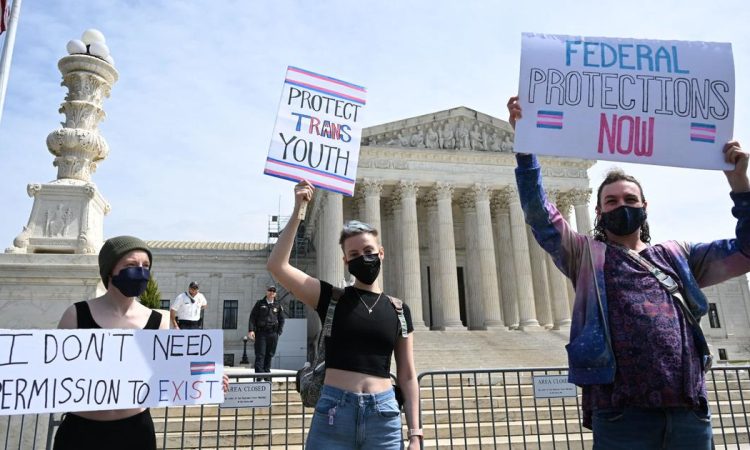
WASHINGTON, D.C. — In a pivotal case poised to redefine the legal landscape of transgender rights and medical autonomy in the United States, the Supreme Court heard oral arguments Wednesday on the constitutionality of Tennessee’s ban on gender-altering procedures for minors. The decision, expected by June, could ripple across the nation, influencing similar laws in at least 25 other states.

The case, U.S. v. Skrmetti, originated from a lawsuit brought by three transgender-identifying minors and their parents, who argue Tennessee’s law violates the Equal Protection Clause of the 14th Amendment. They contend that the ban constitutes sex-based discrimination, barring access to necessary medical treatments that have long been deemed essential for those diagnosed with gender dysphoria.
“It’s not very comfortable being trapped in… you know, because it just doesn’t feel like you,” one teenage plaintiff said, sharing the deeply personal struggle of gender incongruence.
However, Tennessee lawmakers maintain that the law serves to protect children from irreversible medical interventions, which they argue pose significant long-term risks.
“This law is about safeguarding minors from life-altering procedures that they might later regret,” said Tennessee’s attorney, Matthew Rice, during the hearing.
Divided Bench: Strikingly Different Perspectives
The justices’ questioning revealed a stark ideological divide. Liberal justices focused on the potential harm to transgender youth, highlighting the discriminatory undertones of Tennessee’s legislation.
Justice Elena Kagan questioned the law’s intent, asking, “One of the articulated purposes of this law is to engender gender conformity and discourage anything other than that. How does that reconcile with equal protection under the Constitution?”
Conversely, conservative justices, including Justice Clarence Thomas, emphasized parental rights and questioned whether the law constitutes an outright ban. “This law is about the age of patients seeking treatment. Why isn’t this simply a case of age classification rather than a ban?” he probed.
Justice Brett Kavanaugh further pressed on the matter of parental autonomy, asking, “Why not trust parents rather than the state to decide, especially since there’s no direct harm to third parties?”
Chief Justice John Roberts raised concerns about the Court’s role in evolving medical debates, cautioning, “Is the Court really the best institution to make decisions about medical treatments as these issues evolve?”

A Broader Debate on Rights and Risks
U.S. Solicitor General Elizabeth Prelogar, representing the Biden administration, framed the case as a matter of medical access, asserting that treatments like puberty blockers and hormone therapy have been safely prescribed for decades.
“This case isn’t about banning harmful medications,” Prelogar argued. “It’s about denying transgender youth access to care that has been proven to alleviate suffering for countless individuals.”
Yet, opponents of these procedures cite cases of regret among detransitioners and concerns over potential long-term medical harm. The debate has ignited a broader cultural clash over the balance between individual autonomy, parental rights, and the state’s duty to protect minors.
Echoes Beyond the Courtroom
Outside the Supreme Court, the intensity of the debate was palpable. On one side of the barricades, families of transgender children held signs reading “Protect Trans Kids” and chanted in support of medical autonomy. On the other, supporters of Tennessee’s law rallied with banners proclaiming “Save Our Children” and emphasizing concerns over the irreversible nature of such treatments.
Both sides agree on the high stakes of the case. A ruling in favor of Tennessee could embolden other states to adopt similar bans, while a decision against it might strengthen protections for transgender minors nationwide.
A Decision That Will Reshape the Nation
This marks the first time the Supreme Court has directly engaged with legislation targeting transgender-identifying minors, cementing its status as a landmark case. Whatever the outcome, the Court’s ruling will set a precedent, shaping the national dialogue on gender identity, medical ethics, and state versus parental authority for generations to come.
With a decision expected by summer, the nation watches closely as the justices deliberate over an issue that cuts to the heart of identity, autonomy, and the role of government in deeply personal medical choices.