

‘I Became So Desperate’: The Untold Story of the Man Who Lit Up the World—And Now Wants to Power It

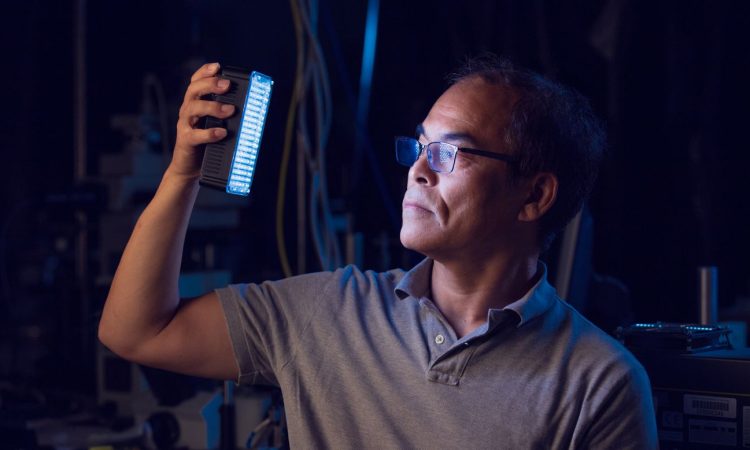
Shuji Nakamura already transformed the world once. His invention of the blue light-emitting diode (LED) changed everything about our daily lives, powering everything from smartphones and big screens to traffic lights and electronic billboards. Some experts have hailed his breakthrough as important as Thomas Edison’s incandescent light bulb . But here’s the part of the story that most people don’t know: before Nakamura earned the Nobel Prize in Physics in 2014, before he was inducted into the National Inventors Hall of Fame, he was a maligned and ridiculed engineer—best known for explosions in his lab and for his lack of productivity. At company soccer and softball games, his colleagues harangued him, asking, “Why haven’t you produced anything? You need to quit!”

Now, at 72, Nakamura has no plans to retire. Retirement, he says, is “very boring.” Instead, he is chasing an even bigger dream: creating a power plant that uses a new kind of high-pulse laser for nuclear fusion, producing an “endless” supply of efficient, clean energy—with no uranium and no chance of a meltdown . To achieve this, he formed Blue Laser Fusion in 2022. To contain the continuous fusion reaction, Nakamura and his team created the optical enhancement cavity, which stores high-pulse laser energy and amplifies its power by up to 100,000 times . The company is scaling up to construct a 1-gigawatt pilot fusion power plant—big enough to power 750,000 to 1 million homes—by 2032 near Santa Barbara, California . When asked if this will be his greatest achievement and gift to the world, Nakamura simply replied, “Yeah, yeah.”