

Georgia Joins 30 States with Religious Freedom Law: A Win for Faith or a Path to Legal Battles?

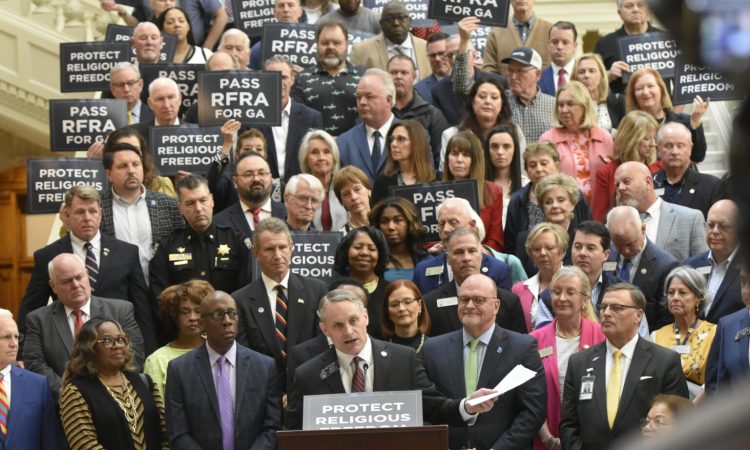
Georgia’s new RFRA law promises to protect religious liberty—but critics warn it could spark clashes between faith and fairness. Where does the balance lie?

Georgia’s RFRA: What Just Happened?
On March 4, 2024, Georgia officially became the 30th state to enact a Religious Freedom Restoration Act (RFRA), signing into law a measure designed to shield individuals and organizations from government policies that “substantially burden” their religious practices.
Governor Brian Kemp approved the bill after it cleared the Republican-led Georgia Senate (32-23) and House (96-70), marking a major victory for religious conservatives. But the move has reignited a national debate: Does RFRA protect sincere faith—or could it enable discrimination under the guise of religion?
What Does Georgia’s RFRA Actually Do?
The law, modeled after the 1993 federal RFRA (passed under President Clinton), sets a strict legal test for when the government can interfere with religious practice:
🔹 Government cannot burden religious exercise unless it has a “compelling interest.”
🔹 Even then, it must use the “least restrictive means” to achieve that interest.
🔹 Individuals can sue the state if they believe their religious rights were violated.
The law defines “exercise of religion” broadly, covering not just worship but any faith-based action—potentially including business practices, healthcare decisions, and workplace policies.
Supporters: A Shield Against Government Overreach
Conservative and religious groups, like the Alliance Defending Freedom (ADF), hailed the law as a necessary safeguard.
“Our laws should protect every person’s freedom to live and worship according to their faith,” said ADF Senior Counsel Greg Chafuen. “This ensures Georgians get a fair hearing when government actions burden their religious beliefs.”
Supporters argue RFRA:
✅ Prevents scenarios like churches being fined for holding services during COVID lockdowns.
✅ Protects small business owners (e.g., bakers, florists) who refuse services over religious objections.
✅ Aligns Georgia with 29 other states, including Florida, Texas, and Virginia.
Critics: A License to Discriminate?
Opponents—including LGBTQ+ advocates, civil rights groups, and some faith leaders—fear RFRA could:
❌ Allow businesses to deny services to same-sex couples, citing religious beliefs.
❌ Undermine anti-discrimination laws, making it harder to enforce protections.
❌ Create legal chaos, with courts forced to balance religious rights against other freedoms.
“This isn’t about protecting faith—it’s about privileging certain beliefs over others,” argued Rev. Jasmine Beach-Ferrara of the Campaign for Southern Equality.
The National RFRA Landscape
Georgia is now the 30th state with its own RFRA, joining:
- Deep red states like Alabama, Texas, and Mississippi.
- Surprising blue states like Connecticut, Illinois, and Rhode Island.
The 1993 federal RFRA was originally bipartisan (passed unanimously in the House and 97-3 in the Senate). But since the 2014 Hobby Lobby case (where SCOTUS ruled corporations could deny contraceptive coverage on religious grounds), RFRA has become politically polarizing.
What’s Next? Legal Challenges & Cultural Clashes
Georgia’s RFRA doesn’t automatically override local anti-discrimination laws, but it sets up potential court battles. Key questions:
🔎 Will businesses cite RFRA to refuse LGBTQ+ customers?
🔎 Can healthcare workers deny care (e.g., abortions, gender-affirming treatment) based on faith?
🔎 How will courts balance religious freedom vs. civil rights?
Final Verdict: A Law as Divisive as It Is Defining
Georgia’s RFRA is both a shield and a sword—protecting religious liberty for some while raising fears of exclusion for others.
One thing is certain: The battle over where faith ends and discrimination begins is far from over.