
Shock and Irony in NYC: Jewish Man Arrested for Scrawling Swastika on Fellow Jew’s Cybertruck

A bizarre case of vandalism unfolded in broad daylight on a New York street, leaving a Tesla Cybertruck owner stunned—not just by the act itself, but by the identity of the suspect. In a dramatic turn of events, the perpetrator caught defacing the vehicle with a swastika was revealed to be Jewish, just like the victim.
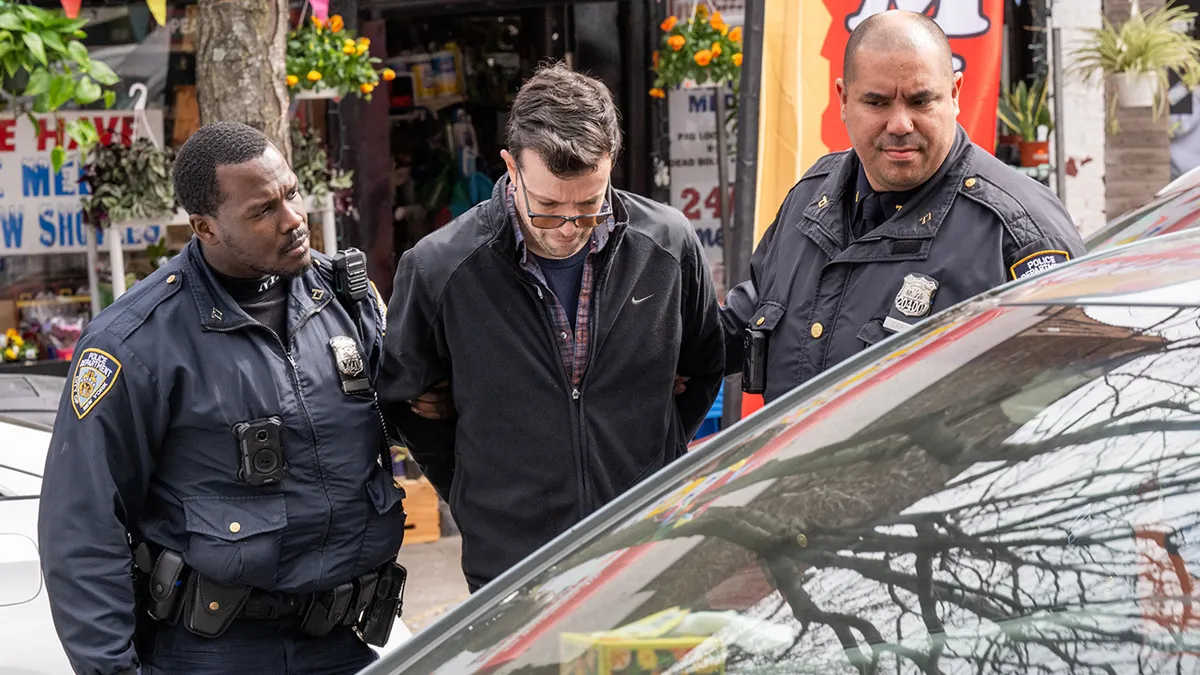
The suspect, Michael Lewis, 42, was taken into custody after he was caught drawing the symbol on Avi Ben Hamo’s Cybertruck—right in front of a New York Post reporter and photographer, who documented the arrest. The scene, playing out in real-time, was as perplexing as it was disturbing.
“I feel myself burning inside,” a shocked Ben Hamo told the Post after the incident.
Caught in the Act
According to reports, Ben Hamo witnessed Lewis double-park his Subaru—its backseat occupied by two child car seats—before approaching the Cybertruck and inscribing the hate symbol in the dust on the driver’s side door.
“What are you doing?” Hamo is heard asking Lewis in a video capturing the confrontation.
Instead of offering an explanation, Lewis fled, abandoning his car in a bike lane. But when he later returned to retrieve the vehicle, he was met by four NYPD officers, along with the Post’s reporter and photographer. He was promptly handcuffed and arrested on suspicion of aggravated harassment.
A Crime Without Damage?
Lewis’ attorney, Mark Luccarelli, downplayed the severity of the incident, emphasizing that no permanent damage was done to the vehicle.
“Our client, who is also Jewish, deeply regrets touching the other man’s car and using a hate symbol in the message,” Luccarelli told Fox News Digital. “He was dealing with a host of personal issues at the time and the action was out of character. As to the criminal case, he was released from custody without any charges because no damage was done to the vehicle and no crime was committed.”
Ben Hamo, however, remains deeply unsettled.
“I can’t fathom someone using the Nazi symbol to make a point—especially someone who shares my faith,” he said. “People hating Elon Musk is one thing, but to do something like this is next level. I’m speechless. That’s just wrong.”
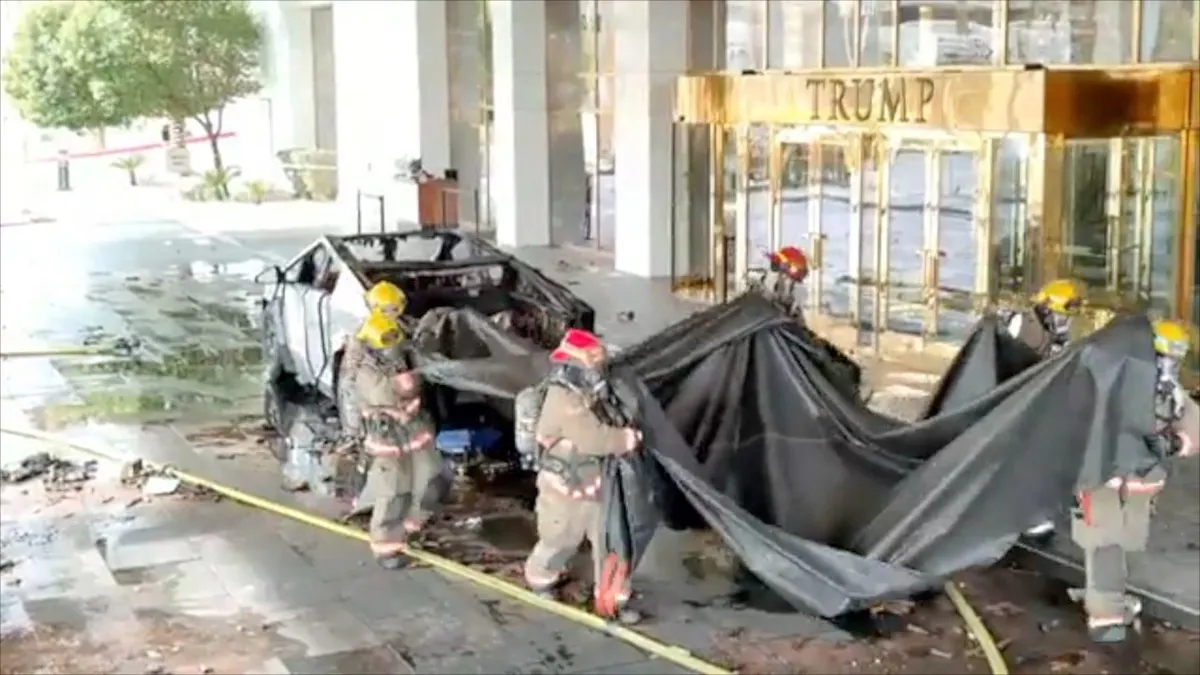
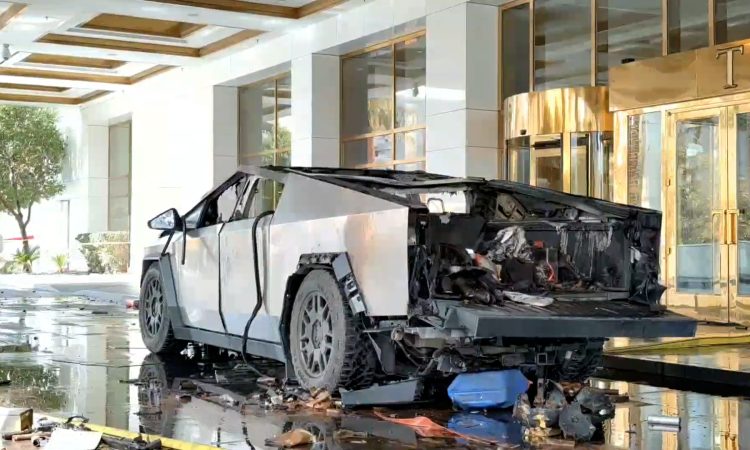
This image shows a Tesla Cybertruck after it exploded in flames outside the Trump International Hotel Las Vegas, killing the driver and injuring seven others, on Jan. 1, 2025.
Musk, Tesla, and Political Backlash
This incident is just one in a growing series of attacks against Tesla and its infrastructure, seemingly fueled by political outrage against CEO Elon Musk.
Musk’s work with the Trump administration’s Department of Government Efficiency (DOGE), created in January to cut wasteful government spending, has placed him in the crosshairs of progressive activists. Across the country, Tesla dealerships and charging stations have been vandalized in what appears to be a wave of politically driven retaliation.
- In Oregon, a Tesla dealership was riddled with bullets, shattering windows and damaging multiple vehicles.
- In Massachusetts, several Tesla charging stations were set on fire.
- A man reportedly threw Molotov cocktails at a Tesla showroom in a separate Oregon attack.
One of the most alarming incidents occurred in Las Vegas, where a Tesla Cybertruck exploded into flames outside the Trump International Hotel, killing the driver and injuring seven others. Authorities are investigating possible links to anti-Musk protests.

The Bigger Picture
Organizations like Indivisible, a left-wing activist group formed by former Democratic congressional staffers, have publicly encouraged protests against Musk. They have even distributed toolkits detailing strategies for disrupting Tesla operations.
Despite the political climate, the irony of Lewis’ actions remains the most striking aspect of this case. A man, himself Jewish, choosing a Nazi symbol to express frustration—against another Jewish man—has left many questioning the depths of today’s social and political discord.
As investigations continue, one thing is clear: in an era of extreme polarization, even something as simple as a car choice can become the catalyst for conflict in America’s culture wars.