

The AI Cold War: US Commerce Secretary Nominee Howard Lutnick Accuses China’s DeepSeek of Tech Theft

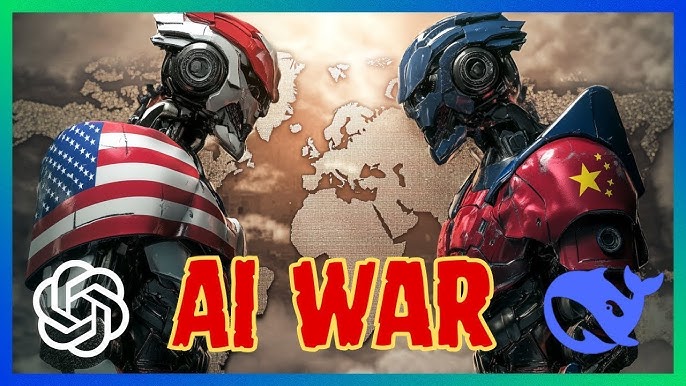
In a striking development at his Senate nomination hearing, Howard Lutnick, the nominee for US Commerce Secretary, accused China’s newly launched artificial intelligence model, DeepSeek, of stealing American technology and circumventing US export controls to acquire high-performance Nvidia chips. Lutnick’s allegations, made on January 29 before the US Senate, have reignited concerns over Beijing’s aggressive pursuit of AI dominance and its implications for global economic and technological power structures.
A Battle Over AI Supremacy
Lutnick painted a stark picture of China’s AI ambitions, suggesting that DeepSeek had unfairly gained an advantage by leveraging Meta’s open-source platforms and illicitly acquiring restricted Nvidia chips. “I take a very jaundiced view of China. They only think about themselves and seek to harm us, and so we need to protect ourselves. We need to drive our innovation, and we need to stop helping them,” Lutnick declared before lawmakers.
His remarks underscore growing concerns in Washington over China’s rapid advancements in artificial intelligence, particularly as the US seeks to curtail Beijing’s access to cutting-edge technologies. The use of Nvidia chips—critical components in AI model training—has been a key focus of US export restrictions. Lutnick’s assertion that DeepSeek managed to circumvent these controls raises serious questions about the effectiveness of existing regulations.

Meta’s Role and the Open-Source Dilemma
One of the most controversial aspects of Lutnick’s testimony was his claim that DeepSeek exploited Meta’s open-source AI infrastructure. The tech industry has long debated the balance between open innovation and national security, with critics warning that publicly available AI models could be repurposed by foreign adversaries. Meta, along with other US tech giants, has increasingly faced scrutiny over its decision to release AI models to the public without stringent safeguards.
Lutnick’s call for stricter oversight aligns with a broader push in Washington to limit China’s access to advanced AI capabilities. His pledge to reinforce the Bureau of Industry and Security (BIS)’s export controls signals a potential tightening of restrictions that could have far-reaching consequences for global AI development.
China’s Silent Response Amid New Year Celebrations
Despite the gravity of the accusations, Beijing has yet to issue an official response, with its government currently observing the Chinese New Year from January 28 to February 4. However, past responses to similar allegations suggest that China will likely dismiss the claims as politically motivated, asserting its right to technological advancement.
Meanwhile, Taiwan has taken swift action. On Friday, Taiwan’s Ministry of Digital Affairs (MODA) announced a ban on government employees using DeepSeek over fears that the AI model could leak sensitive data to Beijing. MODA classified DeepSeek AI as a Chinese information and communications technology (ICT) product, warning that potential data breaches could pose a national security threat. The ban extends to all central and local government agencies, public schools, state-owned enterprises, and critical infrastructure projects, highlighting the growing regional tensions over AI security.

The Road Ahead: Stricter Controls and Global AI Competition
Lutnick’s strong stance suggests that the US will pursue even tougher restrictions on Chinese AI development, potentially through expanded export controls and tariffs. This comes amid an intensifying AI arms race between the world’s two largest economies, with both nations vying for dominance in the industry that will define the future of technology.
The allegations against DeepSeek are likely to fuel further geopolitical friction, particularly as US policymakers weigh the risks of open-source AI against the need for innovation. If Lutnick’s nomination is confirmed, his leadership at the Commerce Department could usher in a new era of aggressive trade and technology policies aimed at curbing China’s AI ambitions.
For now, the world watches closely as the US tightens its grip on AI regulations, ensuring that the battle for technological supremacy remains one of the defining conflicts of the modern era.