“Buttering Bread Differently”: U.S. Envoy Challenges Jerusalem Patriarchs on Christian Zionism

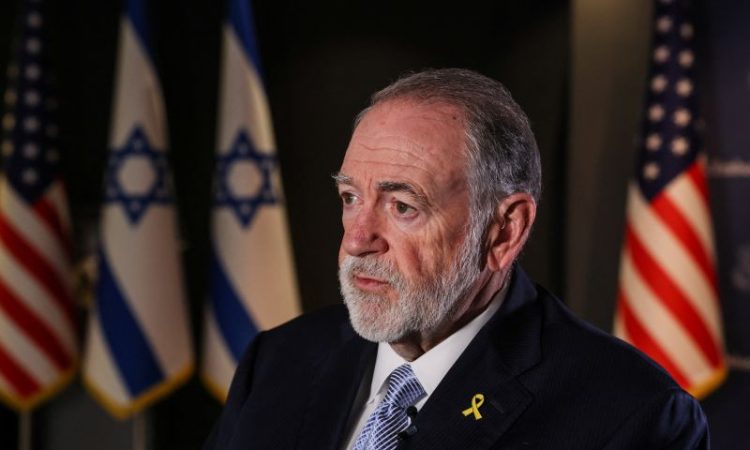
U.S. Ambassador to Israel Mike Huckabee has publicly pushed back against a statement from the Patriarchs and Heads of the Churches in Jerusalem, who warned that outside political and ideological interference—a clear reference to Christian Zionism—was “sowing confusion and misleading the flock” and accelerating the decline of the local Christian community through policies like settlement expansion. Taking to social media platform X, Huckabee, a prominent evangelical, defended the theological and political stance, arguing that labels like “Christian Zionism” are often used to disparage believers like himself. He expressed difficulty understanding why any Christian would not also be a Zionist, which he defined simply as accepting the Jewish people’s right to live in their ancient homeland. “I respect the views of my brothers and sisters in Christ from traditional, liturgical churches,” he wrote, “but I do not feel any sect of the Christian faith should claim exclusivity in speaking for Christians worldwide.”
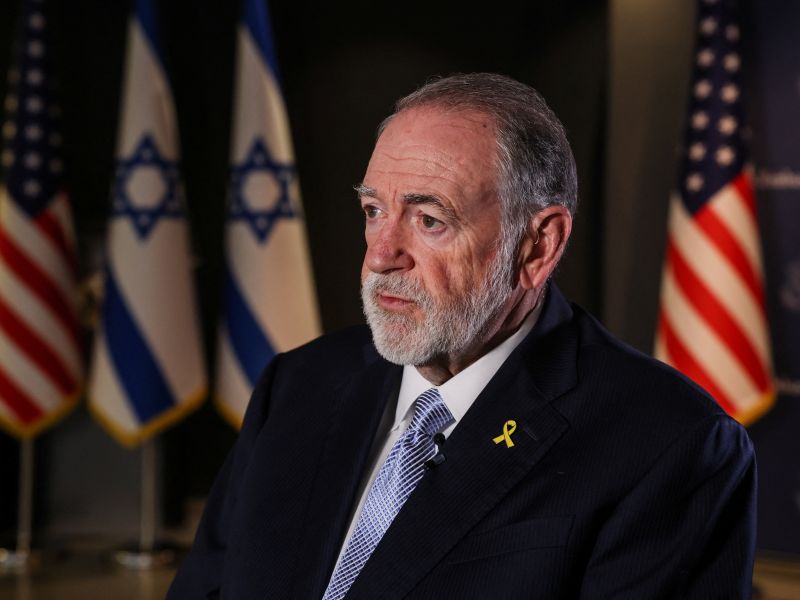
The ambassador’s comments underscore a deep and widening rift within global Christianity regarding the Holy Land. Huckabee positioned himself within an evangelical tradition that emphasizes biblical covenants with the Jewish people, calling for room for differing viewpoints within the faith: “In my faith, there is certainly room for those who ‘butter their bread’ differently than me.” However, observers were quick to note that the Patriarchs’ statement was not solely from historical churches; it was also signed by the head of the Evangelical Lutheran Church in Jordan & the Holy Land, highlighting dissent even within Protestant circles. The exchange lays bare a tense dichotomy: for many evangelicals, support for Israel is a non-negotiable tenet of faith, while for the ancient church leaders living under Israeli authority, such external fervor is seen as a destabilizing force that overlooks their daily realities, such as recent settler violence near churches, and threatens their very survival in the region.