Unveiling the UAE’s Hidden Christian Heritage: 1,400-Year-Old Cross Discovery

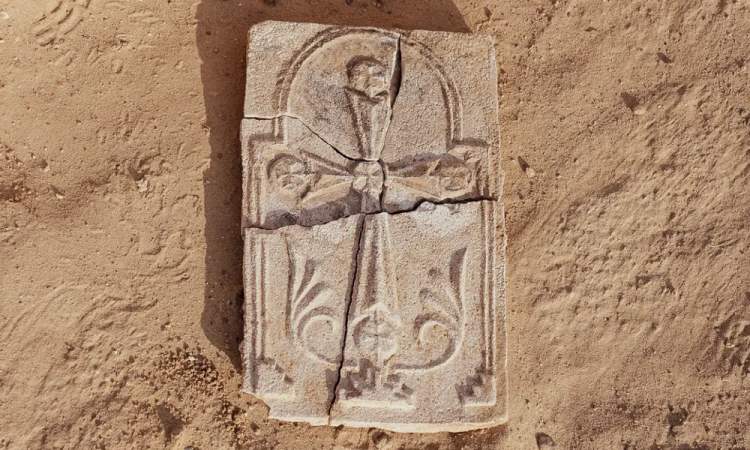
A groundbreaking archaeological find has shed new light on the United Arab Emirates’ rich Christian heritage. A 1,400-year-old Christian cross engraved on a plaque has been unearthed at an ancient monastery on Sir Bani Yas, an island located 170 kilometers southwest of Abu Dhabi. The discovery was announced by the Department of Culture and Tourism (DCT) in Abu Dhabi, marking a significant milestone in understanding the region’s historical commitment to religious tolerance.
The Significance of the Find
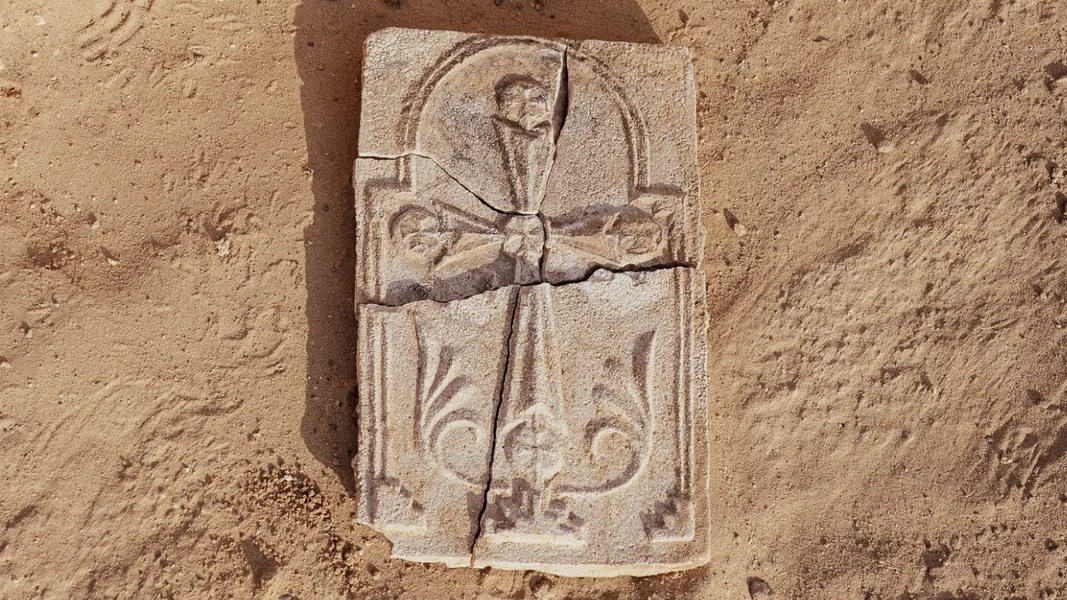
The cross, measuring 27cm in length, is considered the most important artifact from the site to date. Its design features a stepped pyramid with leaves, symbolizing Golgotha, the site of Christ’s crucifixion. Experts believe the plaque was likely used by monks for spiritual contemplation and is similar to artifacts discovered in connection with the Church of the East, which once stretched from the Middle East to China.
A Testament to Coexistence
Mohamed Khalifa Al Mubarak, chairman of DCT Abu Dhabi, emphasized the discovery’s significance, stating, “The discovery of this ancient Christian cross on Sir Bani Yas Island is a powerful testament to the UAE’s profound and enduring values of coexistence and cultural openness.” This find highlights the region’s history of peaceful coexistence between Christianity and emerging Islamic communities ².
The Monastery and Its History
The monastery on Sir Bani Yas Island, active between the 7th and 8th centuries, illustrates a period of coexistence between different faiths. Excavations on the island began in 1992, and since then, the Abu Dhabi Islands Archaeological Survey (ADIAS) has uncovered a church and monastic complex. The site has been preserved and now features shelters and displays, allowing visitors to explore the monastery and view artifacts.
A Broader Network of Christian Sites
The discovery on Sir Bani Yas Island forms part of a broader network of Christian sites across the Arabian Gulf. Similar monasteries have been discovered in Kuwait, Iran, and Saudi Arabia, challenging previous assumptions about the extent of early Christian settlements in the region.