Holy Rebellion or Sinful Revolt? Unpacking the Spiritual Controversy of the American Revolution

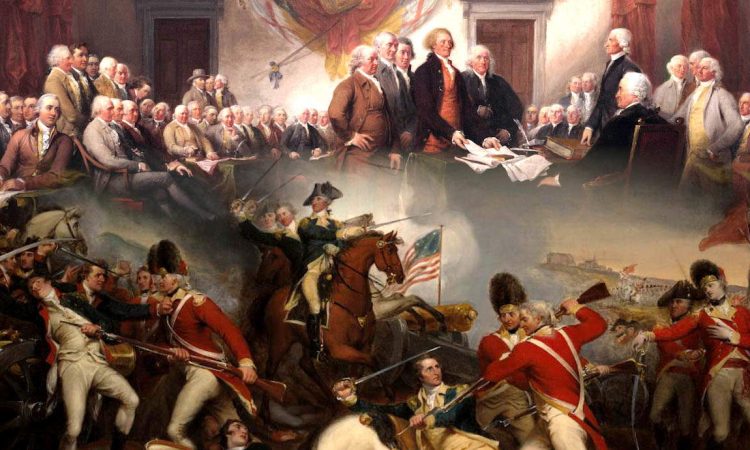
“Rebellion against tyrants is obedience to God.”
So said Thomas Jefferson — a Founding Father of American liberty, but not exactly a Father of the Faith.
As fireworks fill the skies each Fourth of July and patriotic hymns echo through church sanctuaries, few pause to ask the unsettling question:
Was the American Revolution… sinful?

It’s a theological landmine that forces us to wrestle not just with history, but with Scripture. And it’s not just about America — it’s about how Christians should relate to political power, civil disobedience, and divine authority anywhere. Because somewhere right now, believers are asking the same question: When is it righteous to rise up… and when is it rebellion against God?
Let’s peel back the red, white, and blue — and search for truth beneath the tricorn hats and powdered wigs.
Romans 13 vs. 1776: The Central Tension
Romans 13:1-2 is a sword in this debate:
“Let every person be subject to the governing authorities. For there is no authority except from God, and those that exist have been instituted by God.”
On the surface, this verse appears to shut the case: Rebellion is rebellion — and it’s against God.
Yet… the American colonists, many of whom were devout Christians, believed their uprising wasn’t a rebellion against God’s authority, but for it.
So, were they wrong?
What Did the Founders Actually Believe?
Many colonists believed they were not rebelling against a legitimate authority, but resisting unlawful overreach. In their minds, King George III had forfeited his moral authority by violating the natural rights granted by God — life, liberty, and the pursuit of happiness.
Pastors known as the “Black Robe Regiment” preached fiery sermons from pulpits in support of the cause, citing Exodus, Judges, and Acts as justification for resisting tyranny. Their logic? When human laws oppose divine law, we obey God rather than men (Acts 5:29).
To them, it wasn’t sedition — it was sanctified resistance.
Biblical Examples of Godly Resistance
While Romans 13 is clear about honoring governing authorities, the Bible also gives us portraits of righteous resistance:
Hebrew midwives disobeyed Pharaoh’s order to kill newborn males — and God rewarded them (Exodus 1:15–21).
Daniel refused to obey laws banning prayer — and God shut the mouths of lions (Daniel 6).
Peter and John were ordered to stop preaching — and replied, “We must obey God rather than men” (Acts 5:29).
In these cases, civil disobedience wasn’t sinful — it was an act of faithful allegiance to God.
So was the American Revolution one of those cases?
Was the Crown Tyrannical — or Just Inconvenient?
Here’s where historical nuance matters.
The colonists cited heavy taxation without representation, violations of property rights, forced quartering of troops, and restrictions on trade and assembly. From their view, the King had become a tyrant, violating the God-given rights outlined in Scripture and Natural Law.
The Declaration of Independence reads almost like a biblical lament — listing “injuries and usurpations” not unlike the prophetic indictments against unrighteous kings in the Old Testament.
Still, we must ask: Were the grievances severe enough to justify war?
Is War Itself Sinful?
The Bible never paints war as good, but it also doesn’t always call it sinful. God commanded Israel to engage in battle at times (Joshua, Judges), and Ecclesiastes says, “There is a time for war, and a time for peace.”
The issue isn’t whether war is painful — it’s whether it is just.
Christian theology, particularly from Augustine and later Aquinas, developed the Just War Theory — outlining criteria for moral warfare:
Is the cause righteous?
Is the intent pure?
Is it the last resort?
Is it declared by proper authority?
Is the response proportionate?
Many colonial leaders and clergy applied this lens to justify their actions. Still, not all agreed — Quakers, for example, refused to fight on spiritual grounds, believing Christ’s kingdom was not of this world (John 18:36).
So… Was It Sinful?
Here’s the hard truth:
We cannot answer this with absolute certainty.
Because while we can trace the colonists’ intentions, their faith, and their rationale — only God knows the hearts of men. Was every shot fired an act of justice? No. Were there prideful, self-serving motives at play? Certainly. Did some exploit faith for political gain? Absolutely.
But was the desire for liberty, self-governance, and freedom of worship inherently sinful?
Not necessarily.
The American Revolution, like all of history, is a collision of divine sovereignty and human frailty. God’s hand was in it — but so was man’s sin.
What Does This Mean for Us Today?
We live in an era where government overreach, social upheaval, and Christian persecution are real conversations again. The question is no longer just about the past, but about the present — and the future.
How should believers respond to unjust authority today?
Here are a few guiding principles:
Obey the law — unless it causes you to disobey God.
Pray for your leaders — even the ones you disagree with. (1 Timothy 2:1-2)
Be peacemakers — not instigators. (Matthew 5:9)
Speak truth with boldness and humility.
Resist evil — but reflect Christ in your resistance.
The American Revolution may have been a complex mix of virtue and violence. But our call as Christians remains clear:
Be faithful. Be discerning. Be holy in how you honor both God and country.

A Final Reflection
Perhaps the better question isn’t “Was the American Revolution sinful?”
But rather: “If faced with injustice today, would I respond in a way that honors both righteousness and the cross?”
Let the past provoke the present.
Let history lead us to humility.
And let every allegiance — political or patriotic — kneel before the throne of the King of kings.
Amen.