Trump Applauds El Salvador as Deported Migrants Face Swift Justice

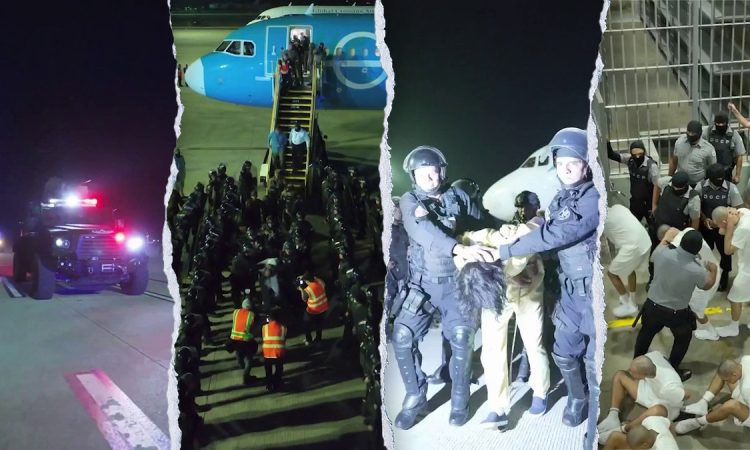
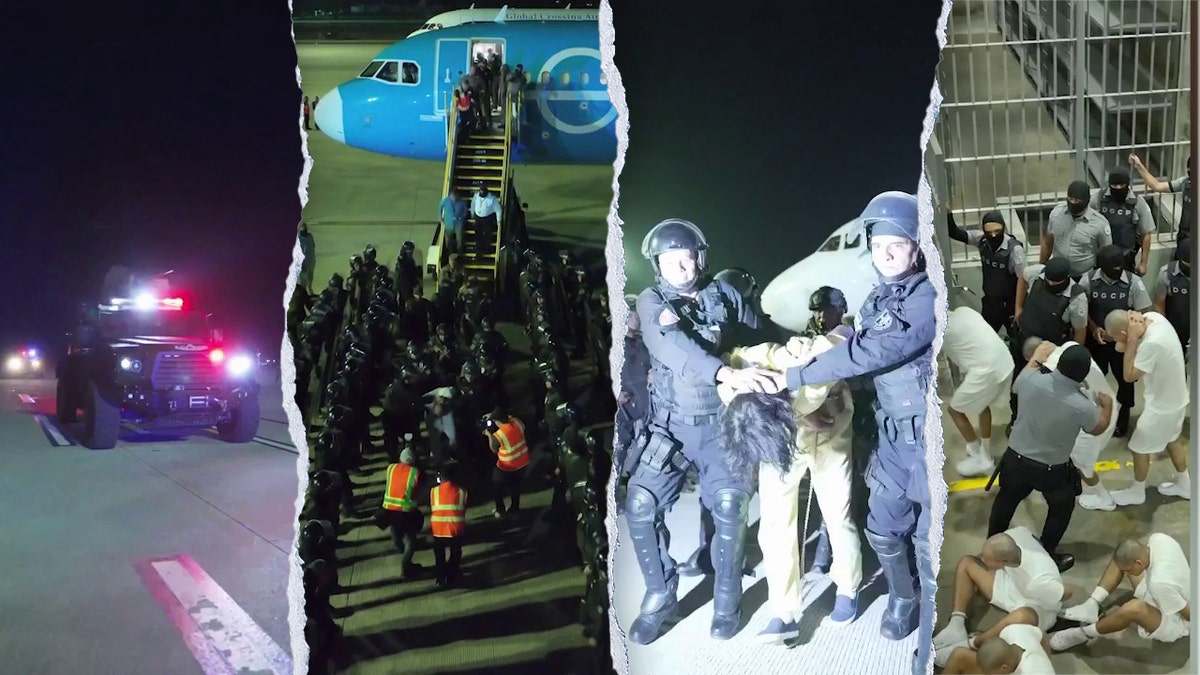
Washington, D.C. – President Donald Trump expressed his gratitude to El Salvador on Sunday after President Nayib Bukele released dramatic footage showing hundreds of alleged migrant criminals arriving in Central America following deportation from the United States.
The deportations come in the wake of Trump’s invocation of the Alien Enemies Act of 1798, which grants the power to expel individuals from enemy nations without a hearing. Taking to social media, Trump thanked Bukele for his cooperation in addressing what he called a “horrible situation.”
“Thank you to El Salvador and, in particular, President Bukele, for your understanding of this horrible situation, which was allowed to happen to the United States because of incompetent Democrat leadership,” Trump wrote. “We will not forget!”
Trump also described the deported individuals as “the monsters sent into our Country by Crooked Joe Biden and the Radical Left Democrats.”
Deportation Details & Federal Court Drama
A senior Trump administration official confirmed that a total of 261 illegal aliens were deported to El Salvador on Saturday:
- 137 under the Alien Enemies Act
- 101 Venezuelans removed under Title 8
- 21 MS-13 gang members from El Salvador
- 2 MS-13 ringleaders labeled as “special cases”
According to government sources, the criminal records of those deported included kidnapping, sexual abuse of a child, aggravated assault, prostitution, robbery, and assaulting a police officer.
In a dramatic turn, U.S. District Judge James Boasberg issued an emergency ruling to halt the deportations. However, the Trump administration stated that the ruling came too late—the planes carrying deportees were already beyond U.S. airspace.
“We did not defy a court order. The order came too late, and illegals were already in international airspace,” a senior administration official said, as first reported by Axios.
White House Press Secretary Karoline Leavitt dismissed the judge’s decision, stating “A single judge in a single city cannot dictate the movements of an aircraft carrier full of foreign alien terrorists.”
Bukele’s Zero-Tolerance Approach
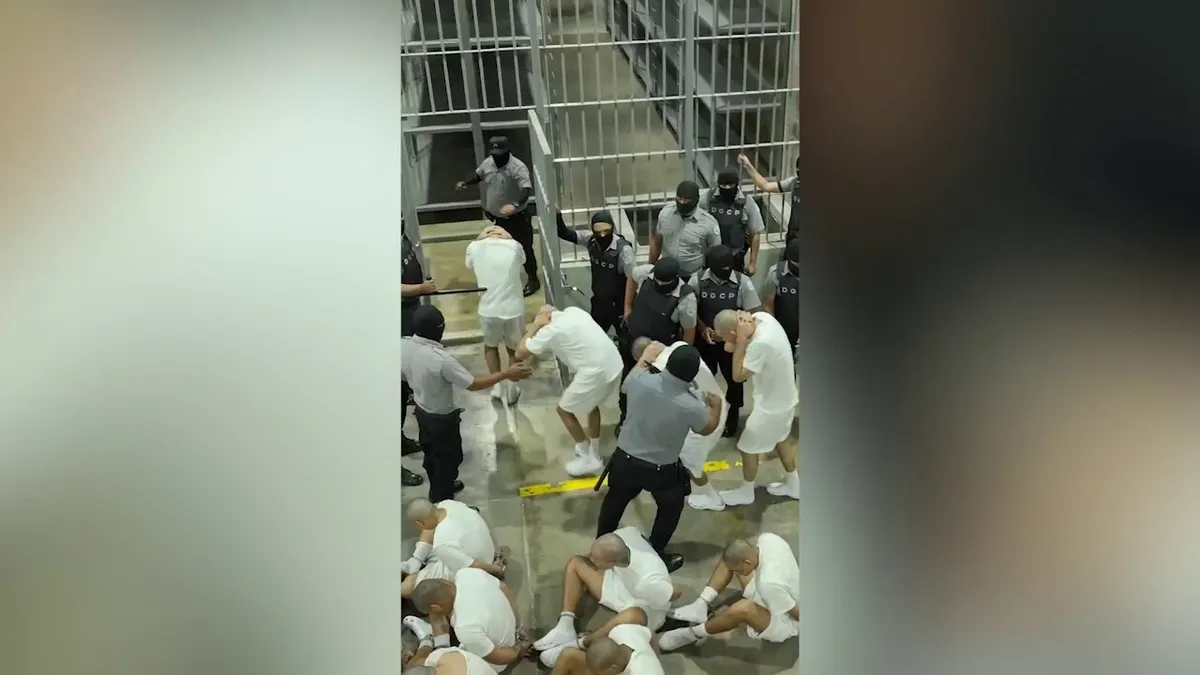
Upon arrival, the deportees were transferred to El Salvador’s high-security ‘Terrorism Confinement Center’, where they will remain for at least a year.
Bukele shared intense footage of their arrival, showing heavily armed Salvadoran authorities forcing the detainees into custody. The video depicted suspects having their heads shaved and marching in lines, hands behind their necks, as they were led to their cells.
Bukele highlighted the strategic benefits of the operation, stating:
“These actions, combined with the production of more than 40,000 inmates engaged in labor under the Zero Idleness program, will help make our prison system self-sustainable.”
He further emphasized that the arrests would enable El Salvador to finalize intelligence-gathering efforts against MS-13, dismantling the gang’s remaining networks, financial sources, and weapons stockpiles.
“As always, we continue advancing in the fight against organized crime,” Bukele stated. “But this time, we are also helping our allies and making our country an even safer place. All in a single action.”
U.S. Officials Laud Bukele’s Actions
Secretary of State Marco Rubio praised Bukele, calling him “the strongest security leader in our region.”
“President @nayibbukele is not only the strongest security leader in our region, he’s also a great friend of the U.S.,” Rubio said in an X post. “Thank you!”
With the escalating crackdown on criminal migrants and increasing tensions over immigration policy, Trump’s administration appears determined to double down on mass deportations, even as legal challenges loom.
What’s Next?
The Biden administration has yet to formally respond to the deportation operation, but the issue is expected to intensify as political debates over immigration enforcement escalate heading into the 2024 election cycle.
As the Trump administration strengthens its “America First” stance on border security, Bukele’s actions in El Salvador may set a precedent for how international partnerships shape the future of U.S. immigration policy.