The Unholy Triangle: Trump, Xi, and the Perilous Quest for Ukraine Peace

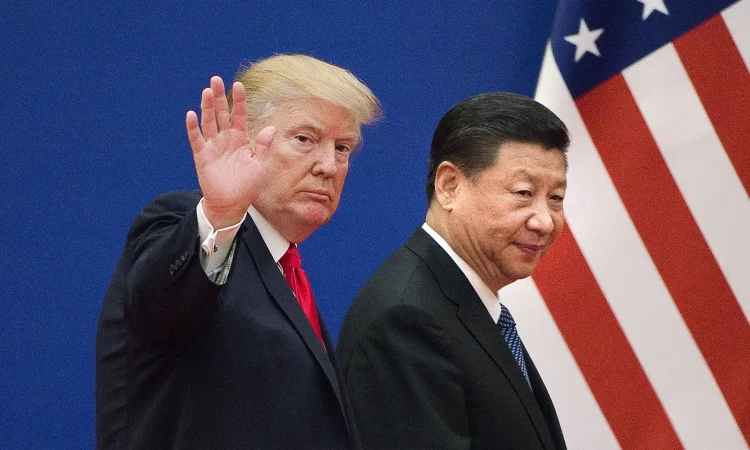
As the war in Ukraine drags into its fourth year, the world watches with bated breath as a new geopolitical gambit unfolds—one that could redefine global power dynamics. U.S. President Donald Trump has placed his bet on an unlikely broker for peace: Xi Jinping, the iron-fisted leader of China and a steadfast ally of Vladimir Putin. In a statement made at the World Economic Forum in Davos, Trump declared, “Hopefully, China can help us stop the war with, in particular, Russia-Ukraine … they have a great deal of power over that situation, and we’ll work with them.”

For Trump, this is not just a plea but a calculated maneuver, one that he claims was already discussed with Xi during a call days before his inauguration. But can China be the peacemaker the world desperately needs? Or is Beijing playing a much deeper, more dangerous game?
The Leverage Xi Holds
China has long sought to portray itself as a neutral party, floating its own vague peace proposals while strategically supporting Russia with economic and diplomatic lifelines. Its motivations, however, extend beyond simple mediation. A weakened Russia is an unacceptable outcome for Xi, who views his alignment with Putin as crucial in countering Western influence and securing a new world order more favorable to Beijing.
Yun Sun, director of the China Program at the Stimson Center, argues that Beijing might find Trump’s proposition tempting, provided that cooperation with Washington serves China’s long-term interests. But any collaboration would come with conditions. China cannot afford a Russia too weakened to stand as a counterbalance to the U.S., nor can it risk alienating European partners by appearing too beholden to Moscow.

The Trump Dilemma: Trading War for Trade?
Trump’s latest actions, however, risk undermining his own peace initiative. His imposition of a sweeping 10% tariff on Chinese imports into the U.S. could heighten tensions at a time when diplomatic flexibility is paramount. Yet, the war in Ukraine presents an opportunity for negotiation—one that may allow Trump to leverage peace talks in exchange for economic concessions from Beijing.
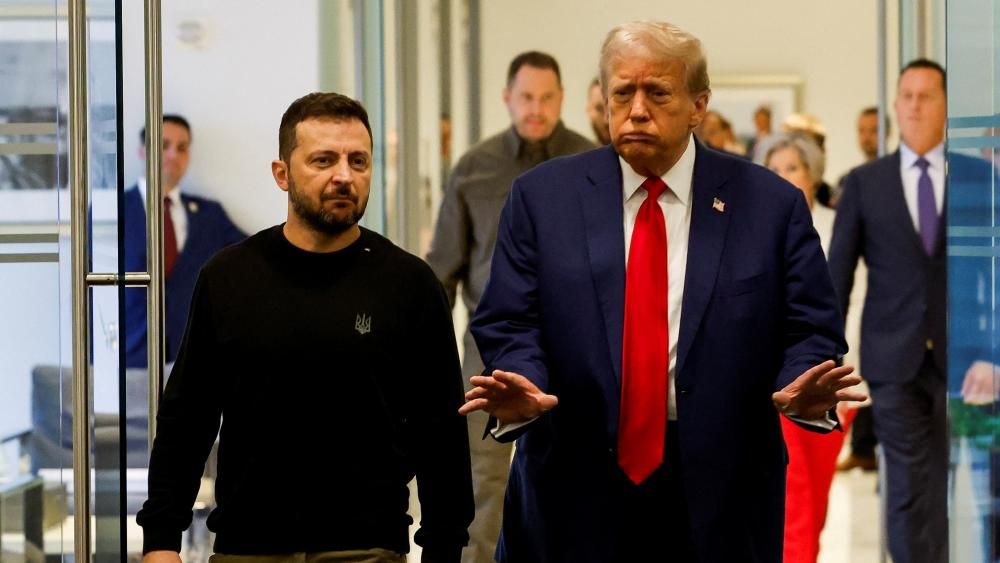
One of Trump’s key allies, Vice President JD Vance, is set to meet with Ukrainian President Volodymyr Zelensky at the upcoming Munich Security Conference, where Chinese Foreign Minister Wang Yi will also be in attendance. Meanwhile, Trump administration officials are scheduled for direct talks with Ukrainian leaders, signaling that Washington is serious about exploring alternative routes to end the war.
But Trump’s unorthodox rhetoric is already raising eyebrows. In a recent Fox News interview, he floated the idea that the U.S. should gain access to Ukraine’s natural resources in return for military assistance—an idea that alarmed European allies. More controversially, he suggested that Ukraine “may be Russian someday,” a statement that plays directly into Putin’s territorial ambitions.
Beijing’s Grand Strategy
For China, the stakes are even higher. Beijing has deftly maneuvered the war to serve its geopolitical interests, using the conflict as a distraction to shift Western attention away from its ambitions in the Indo-Pacific, particularly Taiwan. The last thing Xi wants is a fractured Russia that could no longer serve as a strategic partner against the West.
“Can China threaten to cut off essential supplies to Russia?” asks Liu Dongshu, a political expert at City University of Hong Kong. “It cannot, because China cannot afford a completely failed Russia.” The alliance between Xi and Putin is not just a matter of convenience—it is a linchpin of China’s vision for a new world order where Western dominance is eclipsed.
A New Axis of Power?
Trump’s willingness to engage with Xi on Ukraine stands in stark contrast to the policies of his predecessor, Joe Biden, who sought to isolate both China and Russia through sanctions and military alliances. Instead, Trump appears open to a tripartite deal that could see China act as a broker while maintaining its deep ties with Moscow.
But such a deal comes with risks. If China emerges as the principal mediator, it could secure a peace that disproportionately favors Russia—allowing Putin to retain occupied Ukrainian territories while securing a weakened but functional Russian state. In such a scenario, the war wouldn’t end; it would merely enter a dangerous lull, leaving Ukraine permanently vulnerable to future aggression.
Robert Ward, director of geo-economics at the International Institute for Strategic Studies, warns that any settlement allowing Russia to hold onto occupied land would be a “conflict that isn’t at an end, it’s just a lull.” This is a nightmare scenario for Ukraine and its European allies, who fear a replay of history where temporary ceasefires only serve as breathers before renewed hostilities.
Conclusion: Who Wins, Who Loses?
Trump’s vision of using China as a conduit for peace is a high-stakes gamble. If successful, it could cement his legacy as a dealmaker capable of ending one of the most brutal conflicts of the 21st century. But if miscalculated, it risks strengthening the very forces that seek to undermine Western unity and democratic stability.
For now, all eyes are on Munich, where the world’s top security minds will dissect the potential pathways to peace. But behind the scenes, a far more intricate game is being played—one where the balance of global power hangs in the balance, and where the outcome may shape the geopolitical landscape for decades to come.