Shackled for 40 Hours: Indian Deportees Allege Inhumane Treatment on US Military Flight


In a shocking revelation that has sparked outrage on both sides of the globe, deported Indian migrants have accused US officials of keeping them shackled for the entirety of a grueling 40-hour flight from the United States to India. The men, who were among 104 deportees aboard a US military plane, described the journey as a harrowing experience marked by inhumane treatment, swelling limbs, and a complete disregard for their dignity.
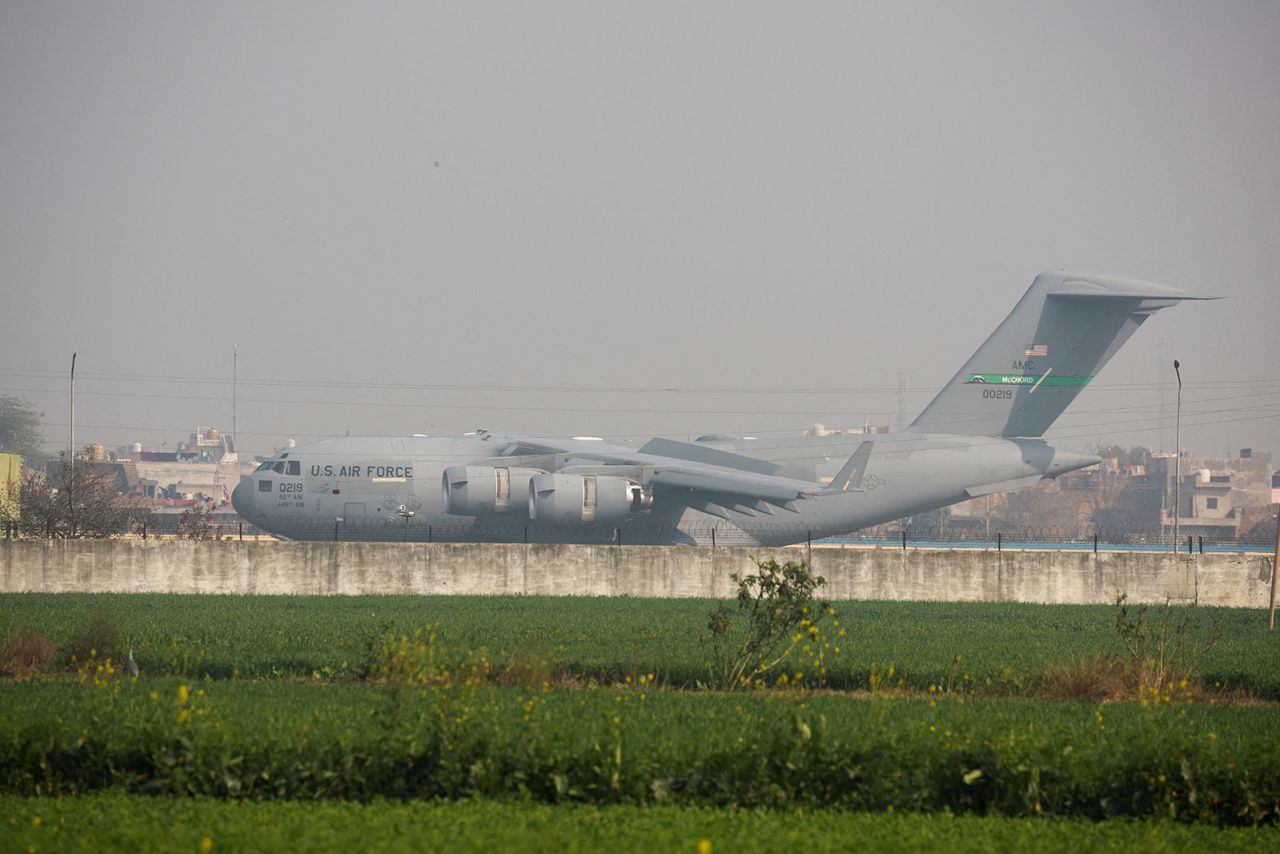
The flight, which landed in Amritsar, Punjab, on Wednesday, is the longest-distance deportation mission since the Trump administration began using military aircraft to expel migrants. But what was intended as a routine deportation has now become a flashpoint for criticism, with Indian lawmakers and human rights advocates condemning the treatment of the deportees as excessive and degrading.
“We Were Treated Like Animals”
Akashdeep Singh, a 23-year-old from Punjab, was one of the deportees on the flight. Speaking to CNN, he recounted how he and others were restrained with handcuffs and ankle chains from the moment they boarded the plane until they landed in India.
“Our hands were cuffed and ankles tied with chains before we took the flight,” Singh said. “We requested the military officials to remove them so we could eat or go to the bathroom, but they treated us horribly and without any regard whatsoever.”
Singh described the humiliation of being forced to use the bathroom while still shackled. “The way they looked at us, I’ll never forget it,” he said. “Right before landing, they removed the shackles for the women. We saw it. For us, they were removed after we landed by the local police officials.”
Sukhpal Singh, 35, another deportee, echoed these claims, adding that the restraints caused his legs to swell during the flight. “If we tried to stand because our legs were swelling due to the handcuffs, they would yell at us to sit down,” he said.
The flight included a refueling stopover on the Pacific island of Guam, but even then, the shackles remained in place. “We were treated like animals,” Sukhpal Singh said.

A Growing Controversy
The incident has drawn sharp criticism from Indian officials and lawmakers. On Thursday, opposition members of India’s parliament staged a protest outside the legislative building, some wearing shackles to symbolize the mistreatment of the deportees.
Indian Foreign Secretary Subrahmanyam Jaishankar assured parliament that the government was “engaging the US government to ensure that the returning deportees are not mistreated in any manner during the flight.” However, the revelations have already strained diplomatic relations, with many questioning the US’s commitment to human rights in its immigration enforcement practices.
This is not the first time the use of shackles during deportations has sparked controversy. Last month, Colombia’s President Gustavo Petro initially denied a US deportation flight permission to land after images emerged of Colombian migrants being restrained in a similar manner.
A Call for Accountability
As the story gains traction, calls for accountability are growing louder. Indian activists and lawmakers are demanding a thorough investigation into the incident, while human rights groups are urging the US government to review its deportation protocols.
For the deportees, the physical and psychological scars of the journey will take time to heal. “I came to the US for a better life,” Akashdeep Singh said. “But what I experienced on that flight was worse than anything I could have imagined.”
The incident serves as a stark reminder of the human cost of immigration enforcement and raises urgent questions about the treatment of vulnerable individuals in the custody of powerful nations. As the world watches, the pressure is mounting on US officials to explain their actions—and to ensure that such an ordeal is never repeated.
*CNN’s Esha Mishra reported from New Delhi, Aishwarya S Iyer from Mumbai, and Ross Adkin from Atlanta. Additional reporting by Adnan Abidi in Amritsar.