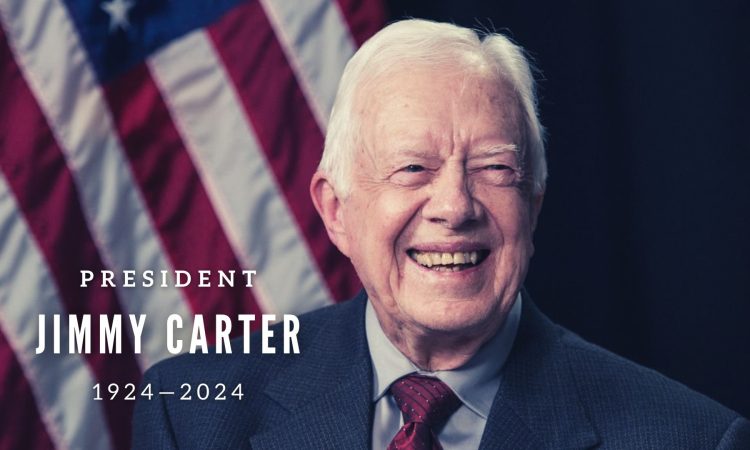
In a century-spanning life marked by profound faith, relentless service, and unwavering humility, Jimmy Carter, the 39th president of the United States, passed away on Sunday at the age of 100. His journey, from a modest peanut farm in Plains, Georgia, to the most powerful office in the world, reflected a deep commitment to integrity, justice, and humanity.
Born James Earl Carter Jr. in 1924, Carter entered the White House in 1977 with a promise to restore trust in a nation disillusioned by political scandal. After the tumultuous years of Watergate and Vietnam, Carter’s presidency offered Americans a glimpse of moral leadership and a fresh start. Eschewing the opulence of the presidency, he walked alongside his wife, Rosalynn, on his Inauguration Day, embodying the humility that would define his public service.
At his core, Carter was a man of deep faith. A devoted Southern Baptist and Sunday school teacher, he wove his spiritual convictions into his vision for the country. “My faith in Christ has grown, with age and with responsibility,” he once said, offering hope to millions of Americans who shared his evangelical roots.
Carter’s single term in office was one of both promise and profound challenges. He brokered the historic Camp David Accords, laying the groundwork for peace between Israel and Egypt. But his administration also wrestled with a nation crippled by inflation, energy crises, and a hostage crisis in Iran that tested the very limits of presidential resolve. His 1979 “Crisis of Confidence” speech was both a call for national reflection and a lightning rod for criticism, as he confronted the malaise gripping the American spirit.
Though his presidency was marred by political and economic hurdles, it was Carter’s post-White House years that truly solidified his legacy. With characteristic humility, he devoted decades to global peace initiatives, combating disease, and advocating for human rights through the Carter Center. His hands-on work with Habitat for Humanity, building homes for the poor, was a testament to his belief that faith is best expressed through action. “Jesus didn’t just preach,” Carter reflected. “His life was devoted to reaching out to those who were marginalized, forgotten, and in need.”
Carter’s personal life was a beacon of steadfast love and commitment. His marriage to Rosalynn, his lifelong partner and confidante, spanned more than 77 years. Together, they demonstrated what it meant to live a life anchored in faith, family, and shared purpose. Their enduring love was a source of strength, even as they faced health challenges in their final years.
The former president’s resilience in the face of adversity was nothing short of remarkable. In 2015, Carter announced a cancer diagnosis that had spread to his brain and liver, but through treatments and unyielding faith, he declared himself cancer-free within months. “I think I have been as blessed as any human being in the world,” he said, radiating gratitude and grace until the very end.
Carter’s century of life bore witness to seismic changes in the world, yet his core values of faith, humility, and service remained unshaken. He leaves behind a legacy that transcends political partisanship—a reminder that the true measure of a leader lies not in power or position, but in their impact on humanity.
As the nation mourns the passing of this humble servant, we also celebrate a life well-lived—a life devoted to lifting others, seeking justice, and walking humbly with God. Jimmy Carter may have stepped off the stage of history, but his legacy will continue to inspire generations to come.
In the words of his own prayerful faith, “Well done, good and faithful servant.”